Publications & News
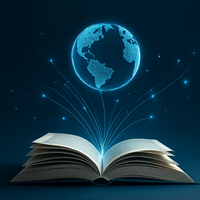
From knowledge to resonance — where books become bridges and insight flows into the global fabric of resilience.
Vom Wissen zur Resonanz – wo Bücher zu Brücken werden und Erkenntnisse in das globale Gefüge der Resilienz einfließen.
Dalla conoscenza alla risonanza — dove i libri diventano ponti e la comprensione fluisce nel tessuto globale della resilienza.
Del conocimiento a la resonancia — donde los libros se convierten en puentes y la comprensión fluye en el tejido global de la resiliencia.
من المعرفة إلى الصدى — حيث تتحول الكتب إلى جسور ويتدفق الإدراك في نسيج المرونة العالمي.
De la connaissance à la résonance — là où les livres deviennent des ponts et où la compréhension s’inscrit dans le tissu mondial de la résilience.
Dari pengetahuan menuju resonansi — tempat di mana buku menjadi jembatan dan wawasan mengalir ke dalam jaringan ketahanan global.
От знания к резонансу — где книги становятся мостами, а понимание проникает в глобальную ткань устойчивости.
ज्ञान से अनुगूंज तक — जहाँ पुस्तकें पुल बन जाती हैं और अंतर्दृष्टि वैश्विक लचीलापन के ताने-बाने में प्रवाहित होती है।
Від знання до резонансу — там, де книги стають мостами, а розуміння вливається в глобальну тканину стійкості.
知識から共鳴へ — 書籍が架け橋となり、洞察がグローバルなレジリエンスの織り目に流れ込む場所
从知识到共鸣 —— 在这里,书籍成为桥梁,洞察力流入全球韧性的织网之中
Bilgiden rezonansa — kitapların köprüye dönüştüğü ve içgörünün küresel direnç dokusuna aktığı yer.
Do conhecimento à ressonância — onde os livros se tornam pontes e a compreensão flui para o tecido global da resiliência.
Kutoka kwa maarifa hadi mwangwi — mahali ambapo vitabu vinakuwa madaraja na ufahamu hutiririka katika muundo wa kimataifa wa ustahimilivu.
지식에서 공명으로 — 책이 다리가 되고 통찰이 글로벌 회복력의 구조 속으로 흐르는 곳.
از دانش تا طنین — جایی که کتابها به پل تبدیل میشوند و بینش در تار و پود جهانی تابآوری جاری میشود.
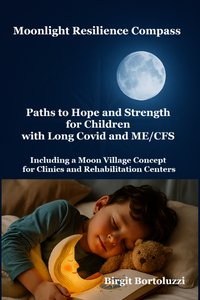
Moonlight Resilience Compass
Paths to Hope and Strength for Children with Long Covid and ME/CFS (including a Moon Village-Concept for Clinics and Rehabilitation Centers)
Available as an e-book in English and German. (Kobo - English), Kobo Rakuten (Japan - English), E-Publi (English), E-Publi, Amazon (German), Amazon (English), Google Books (German), Google Books (English), Litres (German), Litres (English), IBS, Indigo (German), Hugendubel, Orell Füssli, Vivlio, Bokus, Rakuten, Feltrinelli (Italy - English) and many more)
#LongCovid #MECFS #ChronicIllness #ClinicalCare #ChildHealth #Rehabilitation #PostViralSyndrome #PathsToHope #ResilienceCompass #MoonVillageConcept #HealingJourneys #StrengthForChildren #MoonlightResilience #FamilySupport #CitizenScience #HealthEquity #GlobalResilience #PatientCommunity #UnitedNations #PublicHealth #GlobalHealth #UNESCO #WHO
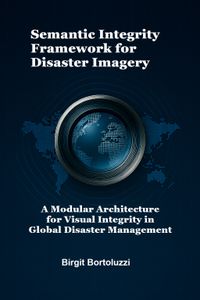
Semantic Integrity Framework for Disaster Imagery
A Modular Architecture for Visual Integrity in Global Disaster Management
Strategic framework for dealing with AI-generated disaster imagery: for visual integrity, context-aware evaluation and reliable decisions in dynamic crisis scenarios.
#SemanticIntegrity #DisasterImagery #VisualIntegrity #CrisisManagement #DisasterResilience #RiskGovernance #AIGovernance #SyntheticMedia #AIResilience #ResponsibleAI #AIForGood #HumanAIAssociation #HumanAIAlliance #GlobalCrisisResponse #CitizenScience #MediaIntegrity #WHO #AI #TrustInImages #TechIndustry #DataIndustry #InfrastructureIndustry #MediaIndustry #KRITIS #Governance #Law #UNIDIR
Why the Semantic Integrity Framework developed here and its strategic architecture + human-AI alliance + AI roles are relevant for EVERYONE who works with AI (whether patent engineer, CEO, AI enthusiast, industry manager, mathematician, consultant in crypto-asset regulation, HR management, strategy consultant for SMEs, data protection officer with a focus on privacy and data protection, journalist, enterprise architect, marketing, public authorities, municipal utilities, project management, digital marketing for brands, etc.)
Strategic Embedding within the Geo-Resilience Compass
#zoonoses #OneHealth #GlobalHealth #HealthAwareness #WHO #UnitedNations #UNESCO #WorldZoonosesDay #DiseasePrevention #PublicHealth #Resilience #Biosecurity #CitizenScience #PreventZoonoses #EarthObservation #GISMapping #CommunityResilience
Zoonoses count among the greatest and at the same time most underestimated – risks of our time. A single spillover moment is enough to shake global supply chains, health systems, and societal stability. The problem: classical surveillance systems respond too late. The invisible pre-phase often remains uncontrolled. Whether we speak of animal diseases, environmental disasters, or social crises – time and again it becomes clear: our societies possess mechanisms of reaction, but hardly any true resilience strategies. Many structures are reactive rather than resilient.
We usually react only when it is already too late. Early warning systems and edge zone triggers are missing or not consistently applied.
My goal is to close this gap even further. With strategic concepts, I want to contribute to developing an even safer multipolar early warning system that connects science, politics, and civil society and enables preventive action. Earth Observation (EO) in this context is for me not a technical add-on, but a strategic instrument: it illuminates the invisible bridges between environment, animal, and human and we should be further empowered here not only to fight zoonoses, but to prevent them before they occur.
The following excerpt illustrates the perspective and depth with which I approach the topic of zoonoses.
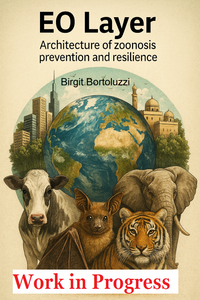
My latest book project “EO / GIS Layer – Architecture of Zoonosis Prevention and Resilience,” engages with one of the most urgent challenges of our time: zoonoses – a global issue that demands vast and multifaceted reflection.
Rather than following conventional paths, I seek deeper entry points. I move mentally through the living worlds of adobe and clay houses – in Argentina (Salta, Jujuy), Bolivia, Peru, Mexico, the United States (New Mexico, Arizona), Morocco, Ethiopia, Yemen, Iran, Afghanistan and North India. These structures act as symbolic gateways into the layered realities of zoonotic risk – not as isolated sources, but as markers of human–animal–environment intersections. The same tensions unfold in urban contexts: fragmented infrastructures, displaced habitats, and overlooked contact zones within cities. From there, I turn to current outbreaks, such as those in Spain, tracing disease phenomena and governance structures.
In this process, images emerge that weave together governance, health, disaster and risk management, and modern infrastructures (power lines, solar parks, industrial facilities, road and rail networks, urban wastelands a. s. o.). A field of tension takes shape – between tradition and modernity, between rituals and technical density, between the animal world and human expansion. Within this space, I ask how animals navigate such superimpositions, how they carve pathways toward us, and where hidden vulnerabilities lie that we have so far overlooked.
All these impressions condense into strategic considerations:
- How can EO and GIS layers, until now classified too softly, be transformed into hard, standardized facts?
- What role can citizen communities and citizen science play in this transformation?
- Why does this subject remain so persistently underestimated?
And countless other urgent questions that demand attention.
Click here for compass direction: East